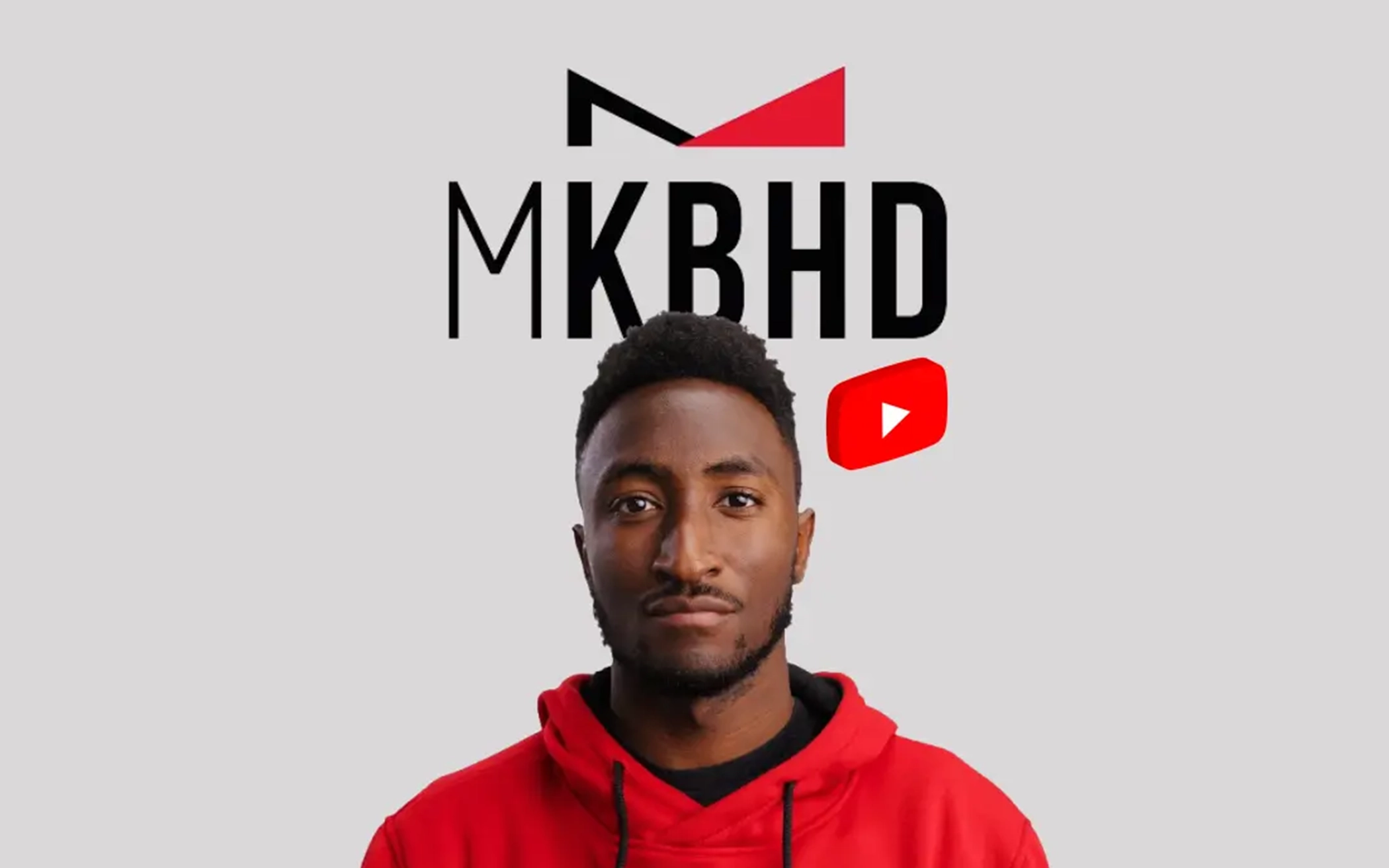
If you only know one tech YouTuber, it’s probably Marques Brownlee. Better known as MKBHD, he’s been making videos since 2009 — starting as a high schooler recording screen captures in his bedroom and growing into arguably the most respected tech reviewer on the internet, with nearly 20 million subscribers and interviews with everyone from Elon Musk to President Obama. His production quality rivals major studios, but his operation didn’t start that way. It started with one person doing everything.
That journey — from solo creator to world-class team — is the foundation of one of the best mental models we’ve seen for thinking about how to grow as a creator. MKBHD calls it the Octopus.
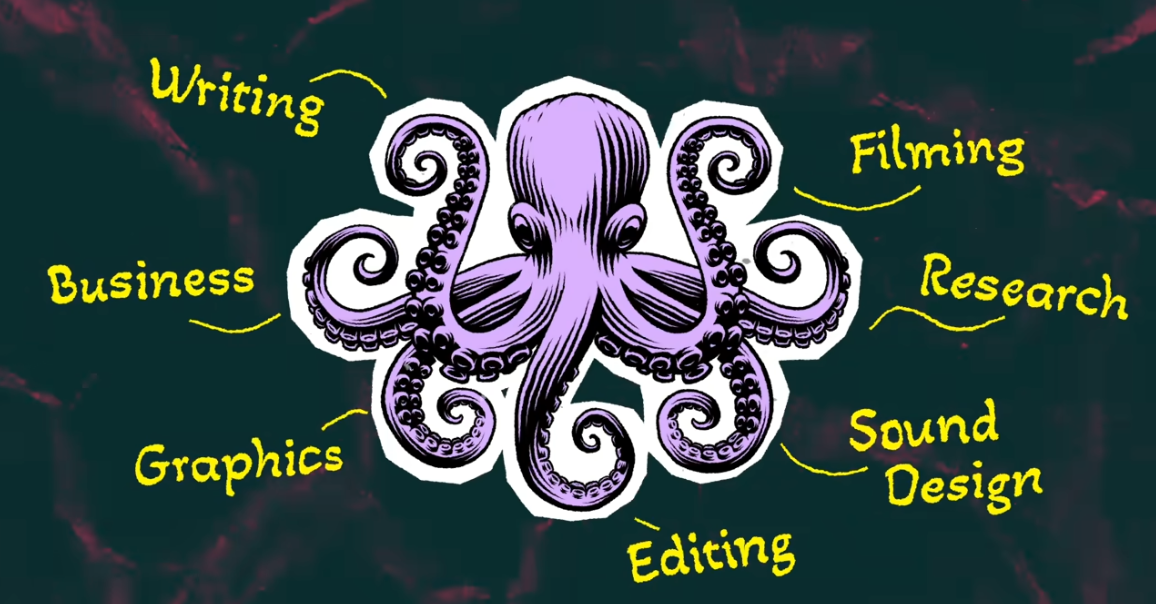
You Are an Octopus
In his video-making masterclass, Brownlee breaks down what it really means to be a creator:
“An octopus has 8 arms. And every creator, whether they know it or not, is doing a bunch of different jobs in one.”
Think about everything that goes into a single piece of content: scripting, filming, lighting, audio, editing, thumbnails, publishing, responding to comments, managing your brand. When you’re starting out, you’re doing all of it. Every arm is yours.
That’s fine at the beginning — it’s how you learn the craft. But it’s not how you scale.
“The goal for a creator is to chop off one of the arms and hand it to somebody who can spend 100% of their time and intensity and intelligence on that thing. … And now I’m back to what I want to do.”
The first arm Brownlee handed off was editing. Then camera work. Then color grading. Each time, he gave that responsibility to someone who could obsess over it full-time — and each time, the quality went up while freeing him to focus on what matters most.
Find Your Three Hearts
Here’s where the analogy gets brilliant. An octopus doesn’t just have 8 arms — it has 3 hearts.
“An octopus has 3 hearts. And that’s just because a creator needs to find their three things that they can’t cut off that they stick to.”
For MKBHD, those hearts are the things only he can do: being the on-camera voice, the product reviewer, and the content strategist. Everything else can — and should — eventually be delegated.
The question for every creator isn’t “how do I do everything better?” It’s “what are my three hearts, and which arms can I hand off?”
What This Means for Assist Creators
You might be thinking: I’m not MKBHD. I don’t have a studio or a team. That’s the point — you don’t need one.
At Assist, we think of our platform features as your arms. Every tool we build is designed to take one of those jobs off your plate so you can stay focused on your three hearts.
As an Assist creator calling live sports, the picture might look something like this:
Your hearts (keep these — they’re yours):
Commentary & personality
Game knowledge & takes
Community & audience connection
Your arms (let Assist handle these):
Synced streaming setup → Assist’s sync technology
Clipping highlights into shorts → Assist’s clipping tools
Scoreboard overlays & graphics → Assist’s built-in scoreboards
Audience discovery & distribution → Assist’s creator profiles & feed
And we’re just getting started. The arms we can build for you are only as good as the feedback you give us. If there’s a job you’re doing manually every stream night — something eating into the time and energy you’d rather spend on your hearts — we want to hear about it. That’s literally how our product roadmap works: creators tell us which arms to build next.
So think about your octopus. Identify the arms that slow you down. Then [email protected] and tell us what to build — so you can get back to what only you can do.
Extra Credit: Make Your Stream Sound Good
If you watch only two things from MKBHD, make it the opening chapter on the Octopus theory (starts at 0:00) and the chapter on audio (starts at 29:52).
The audio section is worth your time because it’s the most underrated lever in content quality — and it applies directly to live streaming. MKBHD’s core point: viewers will tolerate imperfect video far longer than they’ll tolerate bad audio. People might watch a 720p stream with great commentary all night. They’ll bounce from a 4K stream with echo and distortion in under a minute.
For Assist creators, that means:
- -Invest in a decent microphone before you upgrade your camera
- -Get the mic as close to your mouth as possible
- -Minimize background noise and echo in your streaming space
- -Test your audio levels before going live — not during
It’s one of the easiest arms to improve, and it makes every other arm look better.
PS: Check out some of MKBHD’s NBA Content!